 Share
Share  Share
Share  Share
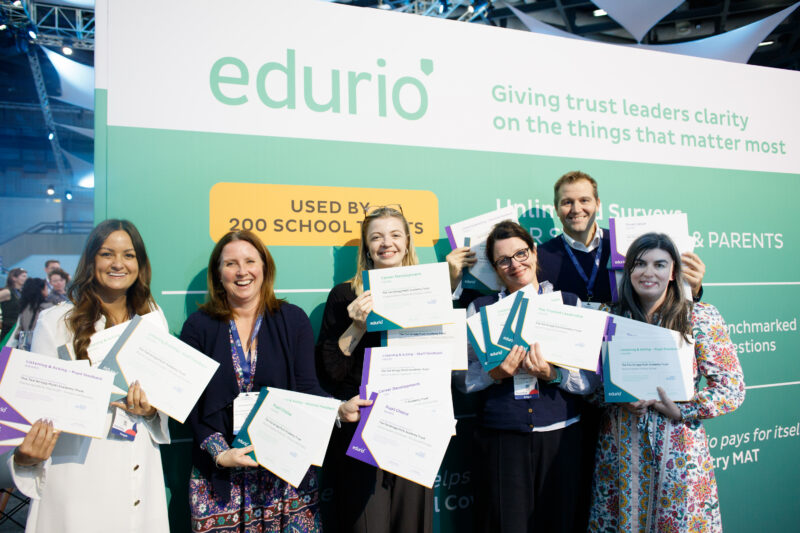
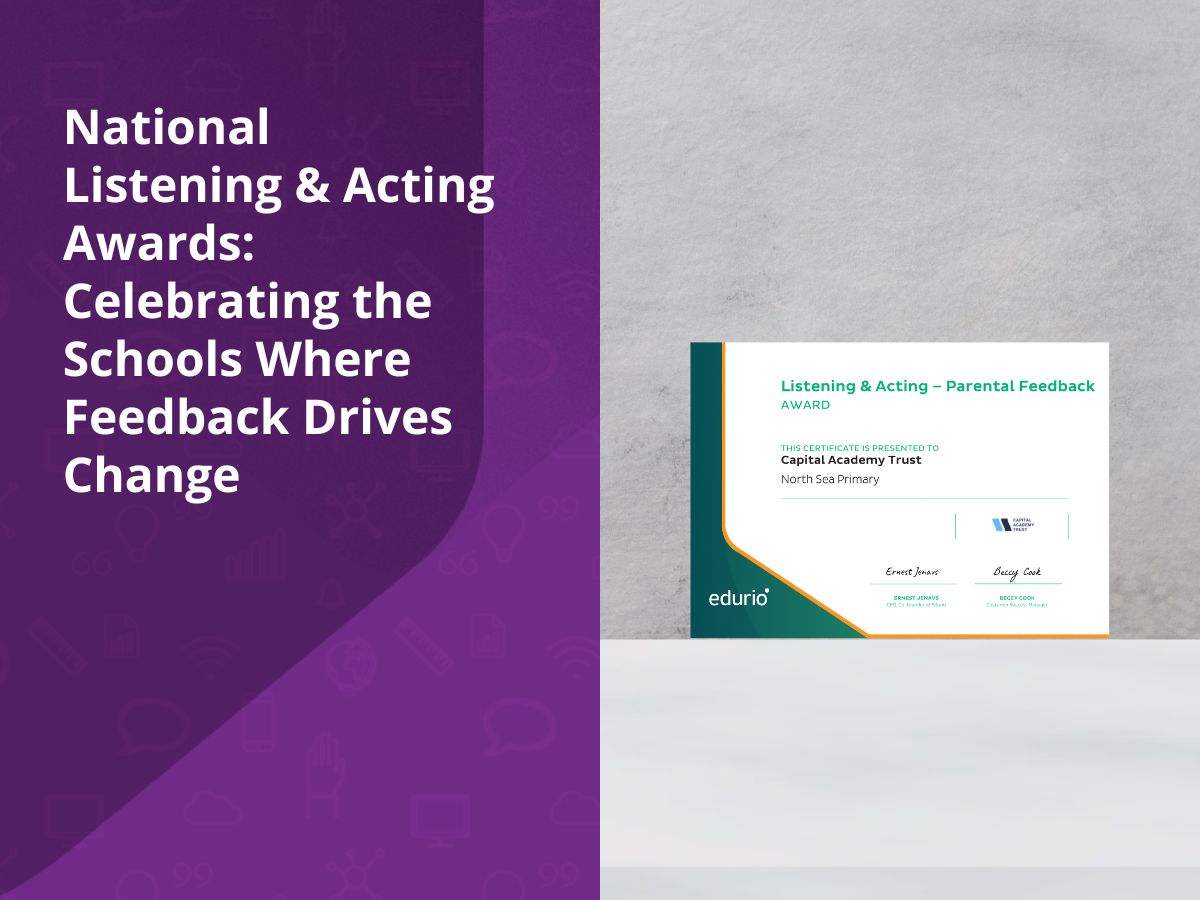
Share This year’s National Listening & Acting Awards recognise the schools and trusts leading the way. These organisations haven’t just gathered opinions; they have embedded a culture of listening, strengthened relationships and demonstrated how feedback can shape everyday school life.
With data from 1,729 schools nationwide, competition for these awards was exceptionally strong. The winning schools represent a new standard for transparency, trust and collaborative decision-making.
As Ernest Jenavs, CEO at Edurio, explains:
“Listening and acting on feedback is a cultural shift. When schools embed listening, they build stronger relationships with stakeholders, make better decisions and develop long-term resilience across their schools. These awards recognise places where staff, parents, and pupils can see their voice turning into action.”
Below, we celebrate the schools and trusts demonstrating what powerful listening cultures look like in practice.
Celebrating excellence: The national Listening & Acting award winners
The schools recognised below are those that scored highest on key “impact” questions from Edurio’s national stakeholder surveys. They demonstrated consistent follow-up, clear communication and visible change.
Before we share the winners in each category, here’s what set them apart:
- They closed the feedback loop, ensuring communities knew how their voice shaped action.
- They created regular, meaningful opportunities for staff, pupils and parents to share their views.
- Their leaders championed transparent communication, even when decisions were difficult.
- They built trust and belonging across their school communities.
These schools show that with the right behaviours, listening becomes a powerful driver of improvement.
Listening & Acting Award – Parental Feedback
Recognising the top 10 schools nationally (out of 596 participating schools) for the question:
“How often do you see that your feedback to the school has impact?”
- Diocese of Salisbury Academy Trust – St. Peter’s CE Primary Academy
- Embrace Multi-Academy Trust – Manorfield Primary School
- GLF Schools – Aureus School
- Greenheart Learning Partnership – The Orchards Primary Academy
- The Co-operative Academies Trust – Co-op Academy Florence MacWilliams, Connell Co-op College and Co-op Academy Leeds
- The Ted Wragg Multi-Academy Trust – Whipton Barton Federation and Lipson Co-operative Academy
- Windsor Academy Trust – Goldsmith Primary Academy
Listening & Acting Award – Pupil Feedback
Recognising the top 10 schools nationally (out of 639 participating schools) for the question:
“How valued do you think pupil opinion is in your school?”
- Accord Multi-Academy Trust – Middlestown Primary Academy
- Avanti Schools Trust – Avanti House Primary School
- Brigantia Learning Trust – Longley Park Sixth Form Academy
- Maiden Erlegh Trust – River Academy
- The Shaw Education Trust – Endon High School and Kidsgrove Secondary School
- The Ted Wragg Multi-Academy Trust – Marine Academy Plymouth – Primary and Nursery, Whipton Barton Federation and Exwick Heights Primary School
- Trinity Multi-Academy Trust – Trinity Sixth Form Academy
Listening & Acting Award – Staff Feedback
Recognising the top 10 schools nationally (out of 1,729 participating schools) for the question:
“How often do you see that your feedback to leadership has impact?”
- Chiltern Learning Trust – Daubeney Academy and Lark Rise Academy
- GLF Schools – Meridian High School
- Nova Education Trust – Nottingham Free School
- South East Essex Academy Trust – Westborough Academy
- The Ted Wragg Multi-Academy Trust – Marine Academy Plymouth – Primary and Nursery, Lipson Co-operative Academy and Marine Academy Plymouth – Secondary
- South Pennine Academies – Woodlands Primary Academy
- The Priory Federation of Academies – Ling Moor Primary Academy
Leading through listening: Why these awards matter
In today’s education landscape, leadership is not about having all the answers, it’s about creating the conditions where everyone can thrive.
The schools recognised above demonstrate that when listening becomes embedded in culture:
- Staff feel more motivated, trusted and likely to stay.
- Pupils build confidence, agency and resilience.
- Parents feel valued as partners in their child’s education.
- Trusts become more adaptable, reputationally strong and improvement-focused.
Listening is not a soft skill. It is a strategic lever for school improvement.
Out now: Best-practice guide from award-winning schools
We have compiled a practical best-practice guide based on real behaviours, habits and processes used by the award winners.
This guide will give school and trust leaders concrete examples of:
- how these schools close the feedback loop
- how they structure communication
- leadership routines that support consistent listening
- practical actions you can adopt immediately
Yes, download it for me →
How to build your own listening culture
The Edurio Listening Framework breaks listening down into four essential practices:
- Voice: Creating regular opportunities for feedback.
- Understanding: Digging deeper than the data to see the emotions and patterns.
- Action-taking: Turning insights into visible, shared decisions.
- Communication: Providing transparent follow-up, even when the answer is “no”.
Where does your organisation stand?
Are you simply gathering opinions, or are you building a listening organisation?
To help you understand your current position, we have developed a listening organisation self-assessment. This tool allows you to reflect on your current practices against the four pillars of the framework and identify clear areas for growth.
Complete the Self-Assessment
Use our 2-minute self-assessment to understand where your organisation sits across four stages of listening development.
By taking stock of where you are today, you can start building a culture where staff, pupils and parents feel truly empowered to shape the future of their school.
How do I win an award?
Read our recent blog on this topic here!
See how Edurio can help you build trust through feedback
Book a demo to explore how your school or trust can gather better insight, benchmark with confidence, and act on feedback in a way stakeholders can see.