Is Anyone Actually Listening?
Over the last ten years, working with more schools and trusts in England, we’ve steadily evolved our understanding of what it really means to “listen” well. At first, the focus was on capturing voice: making sure people had the opportunity to share their experiences, opinions, and needs.
 Share
Share  Share
Share  Share
Share 
Written by Iona Jackson, Managing Director at Edurio.
Iona leads the work of turning Edurio’s national datasets into impactful insights for trust and school leaders. A national keynote speaker and leading voice on stakeholder feedback, she has led major reports on staff experiences, pupil wellbeing and parental engagement, helping schools build more inclusive, supportive environments where staff and pupils thrive.
But over time, what’s become increasingly clear is that listening alone isn’t enough. If the systems and culture around feedback aren’t embedded then the act of listening can fall flat. Done properly, listening isn’t just about making people feel good, it gives organisations a genuine strategic advantage, closing the gap between our world view and that of those around us and helping us direct effort where it will have the most impact.
A matter of perspective

The Blue Door by French artist Raymond Wintz
One way to make that idea tangible is to think about perspective. This is The Blue Door, a painting by French artist Raymond Wintz, and it helps to make this point: depending on your context, you might describe what you think is happening completely differently. There are things that everyone looking at this picture can see – there’s no disputing the existence of a vase by the door and a sailboat in the harbour. There is also plenty we can’t see. Is there a calm beach around the corner? A ship wrecked on the rocks? A mermaid swimming on the shores? We might imagine any number of things as we attempt to paint the fuller picture.
The point is that the same environment can feel like a completely different world depending on your viewpoint, and the biases and experiences we bring to the situation. Without making time to understand other people’s perspectives – and how they experience the world – it becomes much harder to move forward together with shared purpose.
Are you listening?
Our national benchmark data helps underline why this matters. These figures come from staff, pupils, and parents who have taken part in an Edurio survey: people in schools or trusts that have paid to capture feedback. Despite that investment, only about a third of staff feel their feedback has an impact quite often or very often. Around a quarter feel it rarely or never has any impact. Pupils show a similar picture: roughly a third feel that opinions are valued, and around a third feel they aren’t valued much at all. Parents show slightly higher perceived impact, but it’s still almost evenly split.
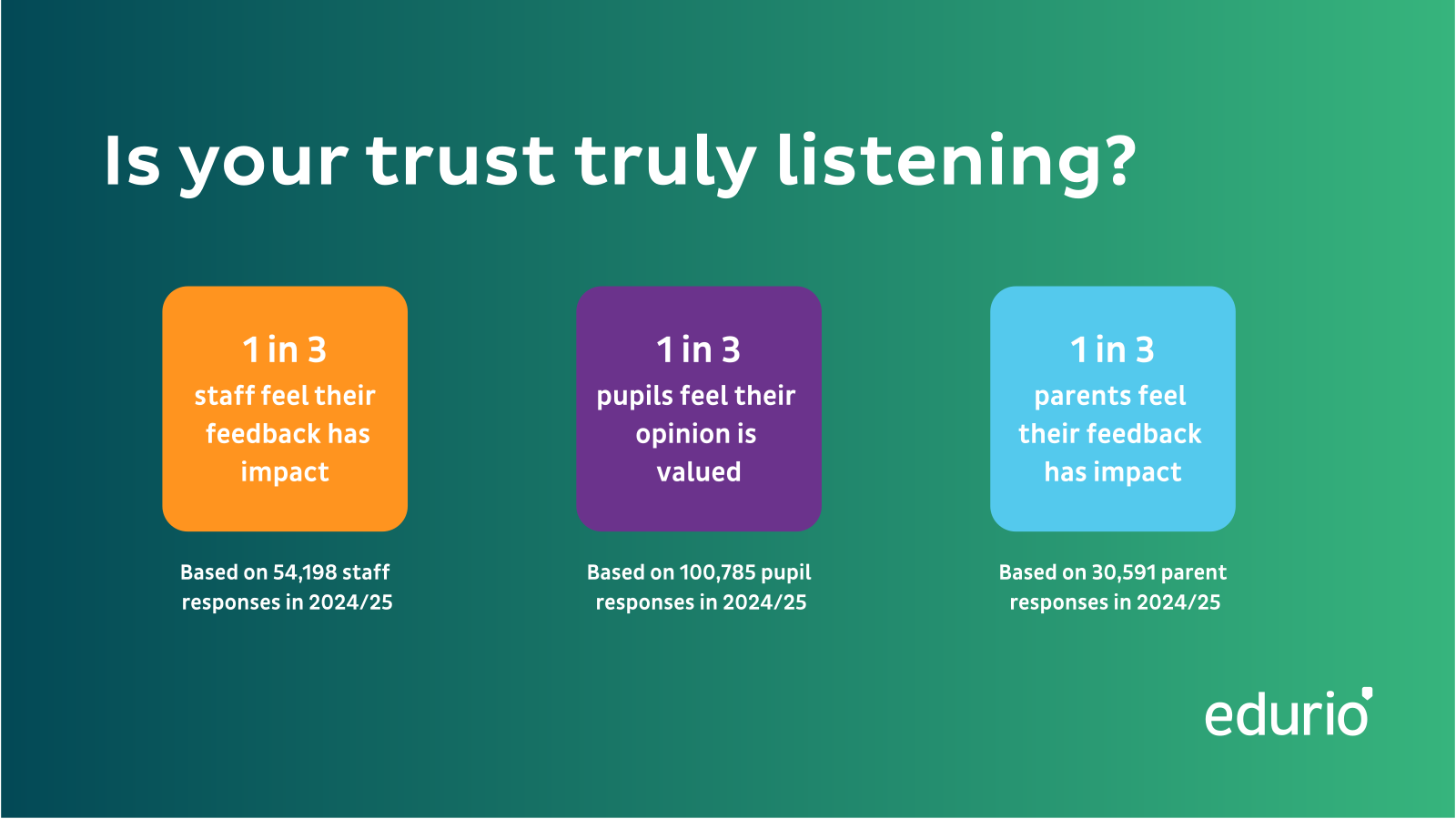
The conclusion is difficult to ignore: even at organisations investing time and money to capture the voice of their people, most don’t feel it goes anywhere. If these figures feel uncomfortable, that’s understandable. But they don’t point to a failure of feedback, or a reason to stop listening. They point to an opportunity to close the loop more deliberately, because when people can see how their input shapes decisions, perceptions of listening shift quickly.
Let’s make it worth your while
Listening well benefits the people giving feedback in obvious ways. When people feel heard, they feel better. They’re more motivated. They’re more likely to feel agency and belonging, and even if the final decision isn’t what they would have chosen, being involved in the process creates clarity. They understand change is coming because they were part of the conversation and can see leadership’s thinking. That creates trust and reduces confusion.
But what isn’t talked about enough is how valuable this is for organisations too. Listening enables better decision-making. Leadership teams may be convinced they know what the biggest problem is, already mobilising teams, budgets, and effort to solve it, only to discover that the issue wasn’t actually affecting people in the way they assumed. Meanwhile, something else may be creating friction that leaders hadn’t noticed. With tight budgets and limited capacity, listening helps direct resources where they’ll have the most impact. It also strengthens leadership itself: engaged people are easier to lead. It builds reputation and trust over time. And it makes change easier, because change feels done with people, not to them. In short, organisations that use listening to direct effort wisely, and reduce friction when change needs to happen, may find that the time and energy saved multiplies.
Have I convinced you yet? Good – time to get started!
To make this practical, we break listening down into two parts: listening practices and listening mindsets. Practices are the systems and structures you put in place. Mindsets are the cultural and emotional foundations that determine whether those practices actually build trust or accidentally damage it. You can have all the right processes and still make things worse if the mindset isn’t there.
The listening practices include four areas: Voice, Understanding, Action, and Communication.
Voice is about capturing feedback, whether through surveys, focus groups, corridor conversations, or any other way of gathering insight.
Once you’ve captured voice, the next step is Understanding: making sure you interpret what you’ve heard properly. That means analysis: breaking feedback down by groups, identifying differences between experiences, and triangulating across staff, pupils, and parents. Sometimes what works well for pupils also benefits staff; sometimes there are tensions where improvements in one area create challenges in another. The more accurately you understand what’s happening, the easier it becomes to choose the right actions.
Then comes Action: selecting the steps that will genuinely move things forward, and being confident those steps are solving the right problems.
And finally, Communication: this includes the practical updates, but also the basic loop-closing: thanking people for their time, reflecting back what you heard, sharing what you’re going to do now, and being honest about what you don’t yet know while making clear you’re going to look into it. This step is often overlooked, and it’s a great shame when it is.
Alongside these practices are five key listening mindsets. The first is Modelling Openness: being genuinely curious and receptive to feedback. If someone gives honest feedback and the response is anger or defensiveness, trust collapses and people stop sharing.
The second is Practising Empathy, which sounds simple but is difficult in reality: constantly checking whether you really understand people’s perspectives, and what biases you might be bringing in.
The second is Practising Empathy, which sounds simple but is difficult in reality: constantly checking whether you really understand people’s perspectives, and what biases you might be bringing in.
The third mindset is Acting Responsively: finding the right pace. You don’t want to jump into action immediately and try to do everything people have asked for, especially if requests contradict each other or don’t serve the longer-term goals of the organisation. But you also don’t want to analyse forever and get stuck waiting for the perfect solution. It’s about momentum and judgement.
The fourth is Championing Inclusiveness: asking who you’ve missed. Surveys are a powerful way of hearing many voices quickly, but they don’t capture everything. Some people won’t speak up in forums; some voices dominate; some groups need more deliberate invitation. Inclusiveness requires paying attention to whose input is missing and why.
Finally, Psychological Safety matters for both sides. Feedback-givers need to know they won’t be punished for honesty, but leaders also need to look after themselves while receiving challenging feedback. Especially at trust level, if leaders choose to collect feedback and discover it highlights big issues in schools, it can carry pressure and emotional weight. Psychological safety is about creating a culture where honesty is possible, and where everyone involved has the capacity to stay engaged.
For each of the listening practices, it’s possible that your organisation is already strong, or has a little way to go to fully embed listening as a leadership strength. Our self-assessment helps your team identify where on the journey you are, and what you can do to improve listening across all levels of the organisation. Take our short assessment here to get started, or contact us to speak to one of our specialists about the journey towards becoming a Listening Organisation.
