 Share
Share  Share
Share  Share
Share Over the past few years, the education landscape has changed dramatically. Statutory expectations have increased, public concern about pupil safety has grown, and schools and trusts have worked hard to adapt their policies and procedures to keep pace. But the critical question remains. Do we really know how safe pupils feel in their day-to-day lives, and whether they believe their voice will be heard when something is wrong?
The Department for Education’s new Schools White Paper makes a clear case for putting pupil belonging, safety and wellbeing at the heart of school improvement. It warns that, in a world of rapid change and growing pressures, children need to feel a genuine sense of belonging. Yet this has not been prioritised consistently. National survey data cited in the White Paper show a fall in pupils’ reported feelings of safety and school belonging between 2014 and 2022.
Safety and Pupil Belonging are essential to exceptional safeguarding; a pupil can follow routines, attend most days, and still carry experiences they do not feel able to share. Real safeguarding culture is not only about systems and compliance. It is about whether pupils trust the adults around them, feel connected to their school environment, and believe speaking up will lead to support rather than consequences.
That is where listening becomes your most powerful tool. To understand safeguarding culture properly, schools need insight into pupils’ lived experiences at school, online, and in their communities. The White Paper also signals the direction of travel. It expects far more schools to monitor children’s sense of belonging and engagement in the coming years, recognising that what gets heard and acted on shapes whether children feel safe enough to speak.
Safety and reporting: understanding pupils’ lived experience
The Schools White Paper strengthens expectations around home-school partnerships, including minimum expectations for how schools work with parents. Against that backdrop, pupil safety and wellbeing have been a consistent concern.
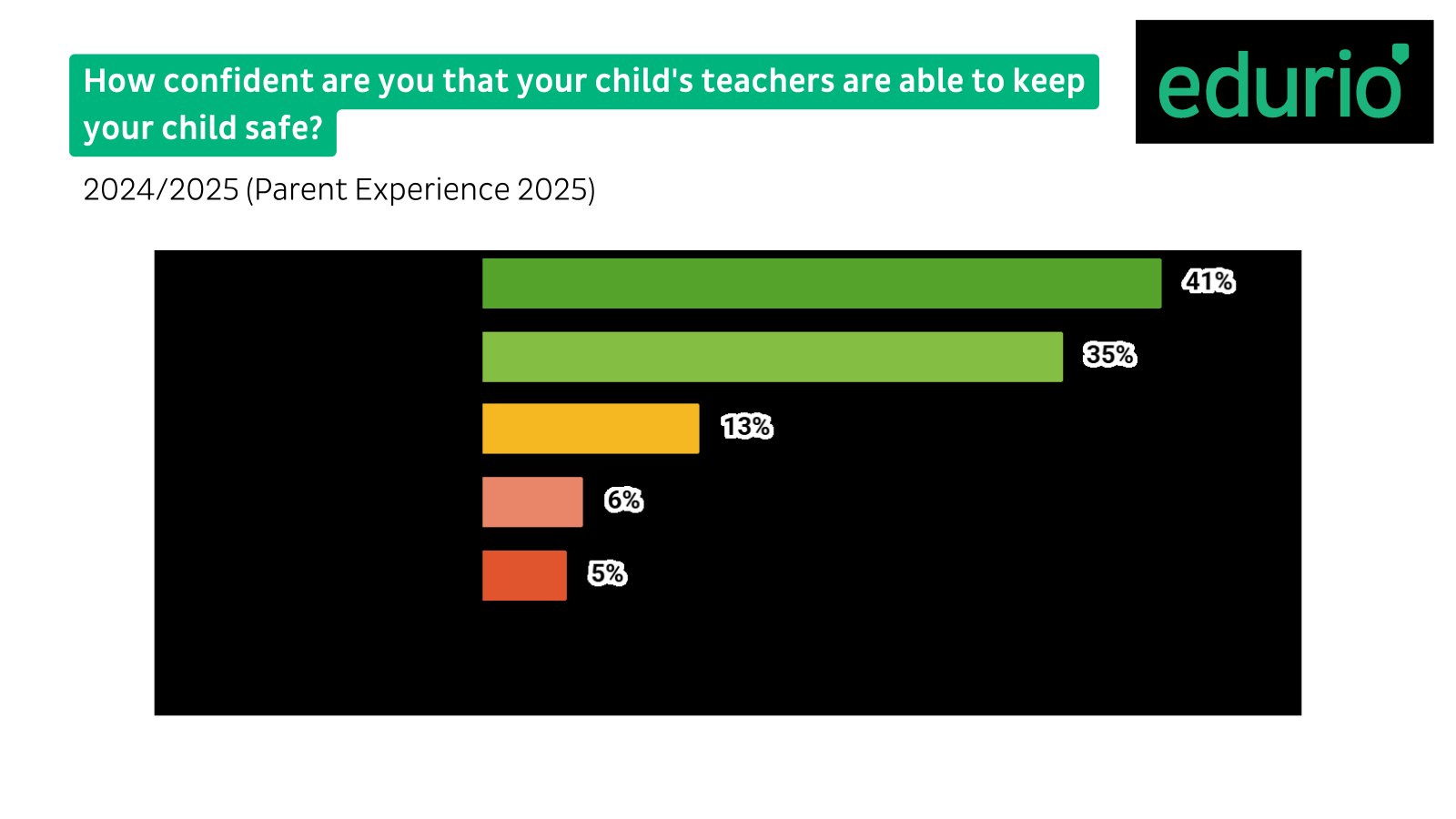
In our Parental Engagement Survey, 76% of parents reported feeling completely or quite confident that their child’s teachers can keep their child safe, a figure that has remained steady over the last three years. While most parents do have confidence, this still leaves 24% whose confidence is limited. That gap matters because safeguarding is stronger when families trust the school’s approach and feel assured that concerns will be heard and addressed.
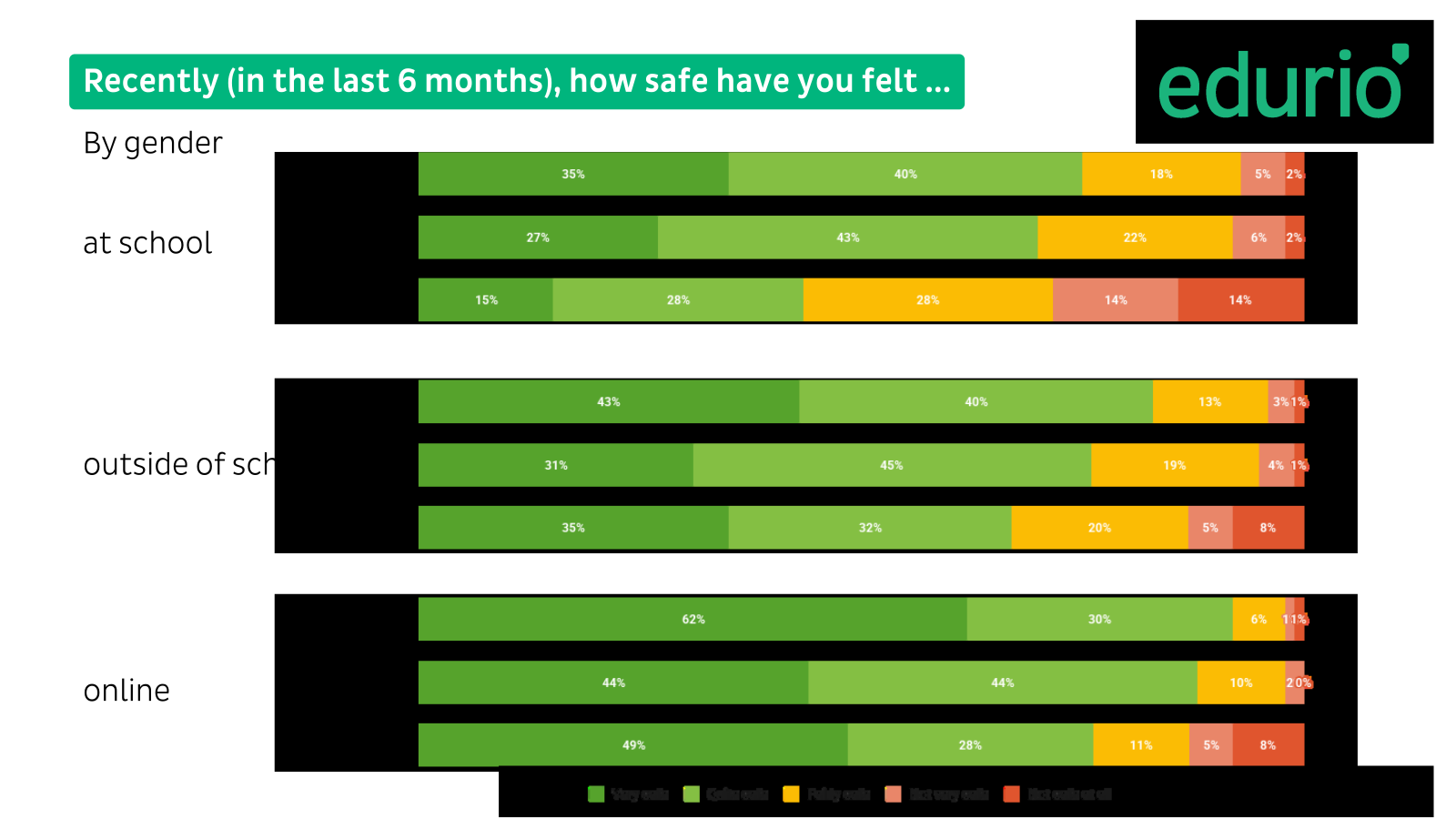
To understand how this compares with pupils’ own experiences, we also asked pupils directly how safe they feel in different settings. In 2024/2025, responses in our Pupil Experience and Wellbeing survey told us that:
- 72% felt safe at school
- 79% felt safe outside of school
- 89% felt “very” or “quite” safe online
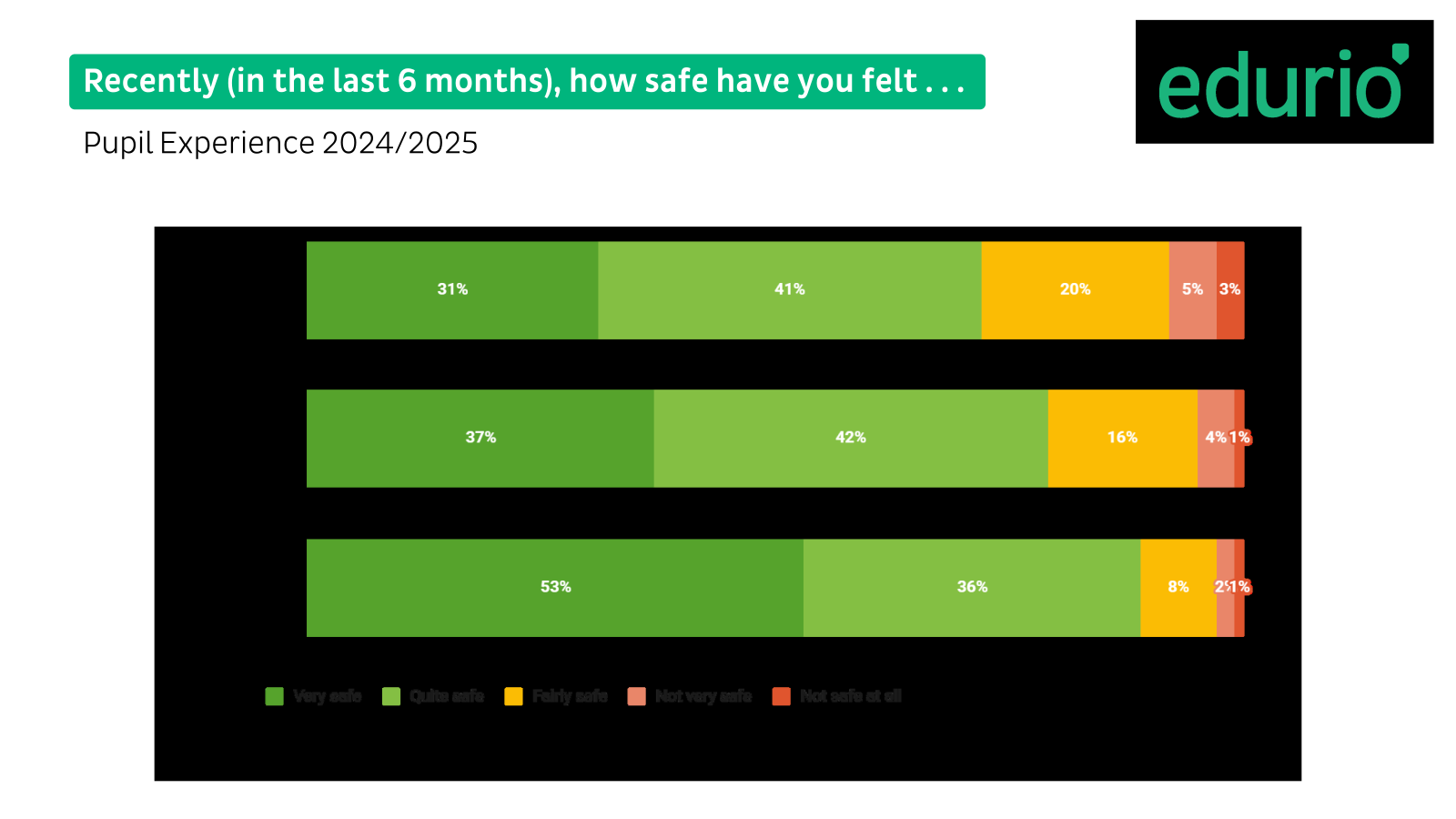
Pupils’ responses help to show where some of that uncertainty may come from. These figures have also remained fairly consistent over the last three years. Taken together, the findings suggest a broadly steady, but slightly uneven, picture of safety and reassurance. While most pupils feel safe, they report noticeably lower levels of safety at school (72%) than online (89%) or outside school (79%). This does not mean schools are unsafe. Pupils’ high reported sense of online safety warrants a pause for thought. Online safety is an evolving challenge, and these results raise an important question: are pupils feeling safe because of the work schools and families are doing to educate them about risks, or because some risks are still going unnoticed?
The picture becomes more nuanced when we look at the school phase and gender. Primary pupils are materially more likely than secondary school pupils to report feeling safe at school (84% for primary, 69% for secondary), somewhat more likely to report feeling safe outside of school (82% for primary, 79% for secondary), but slightly less likely to say they feel safe online (86% for primary, 90% for secondary).
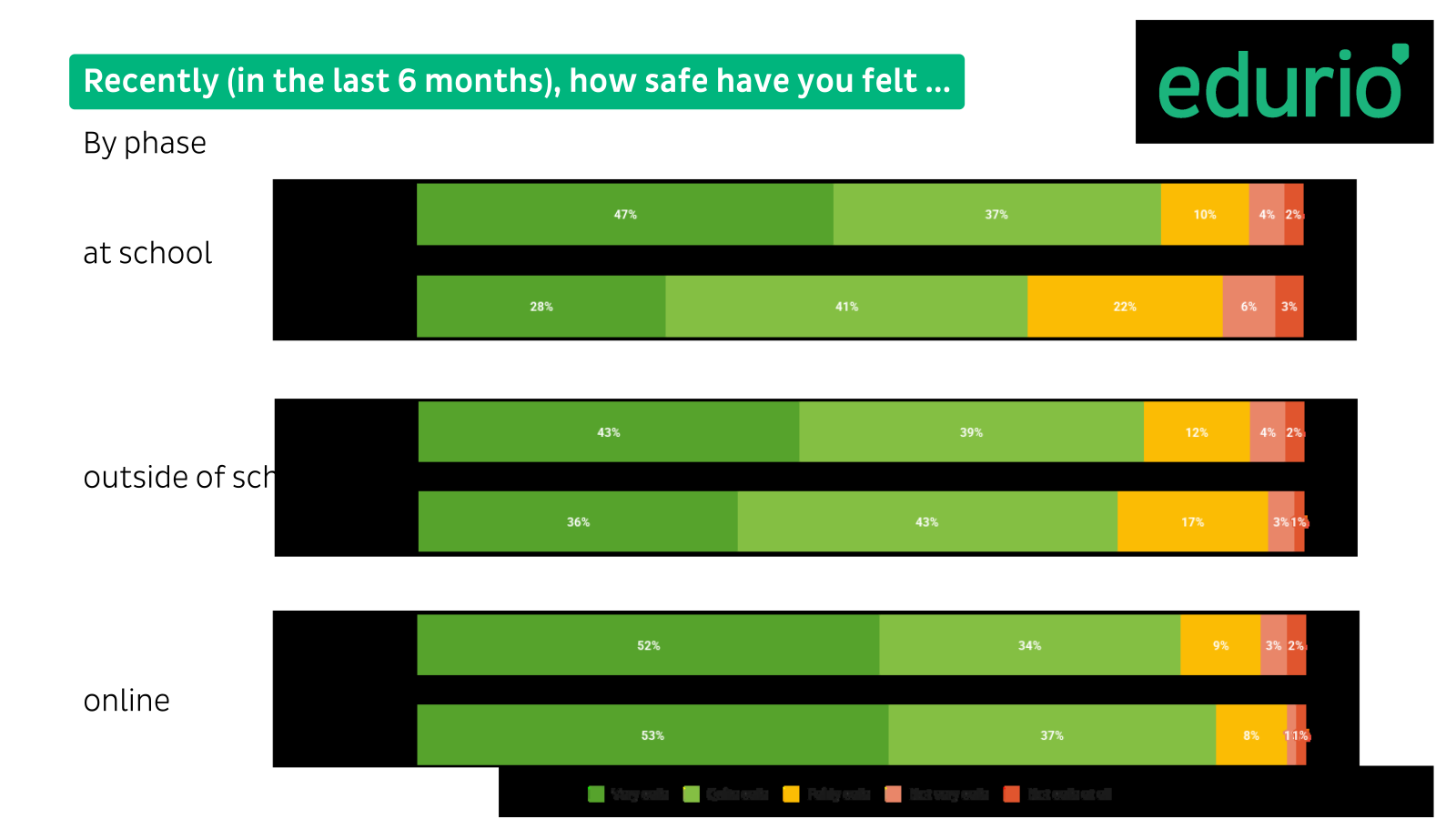
When we look at gender, we see a consistent pattern: male pupils report feeling safer than female pupils at school, outside of school, and online. Pupils with another gender identity are consistently less positive than their male and female peers.
Finally, it’s important to triangulate information across sources to build the fullest picture. Parents’ concerns, pupils’ experiences, and staff observations all matter, but they do not always align. Strong safeguarding depends on listening across all three.
Safeguarding through the curriculum: from protection to prevention
A strong safeguarding curriculum equips pupils with the knowledge they need to stay safe and support others. But coverage alone does not guarantee impact. The Schools White Paper reinforces why. Belonging, safety and wellbeing are now positioned as central to school improvement, and national data shows pupils’ feelings of safety and belonging have declined over time. That makes the curriculum’s role even more important, not only in teaching risks and rights, but in building the trust and confidence pupils need to speak up when something does not feel right.
Pupils in the primary phase are more likely to report having learnt about nearly all topics compared to secondary pupils. The exception is Mental Health and Wellbeing, with 56% of primary-aged pupils reporting having learnt about the topic, compared to 72% of secondary-aged pupils.
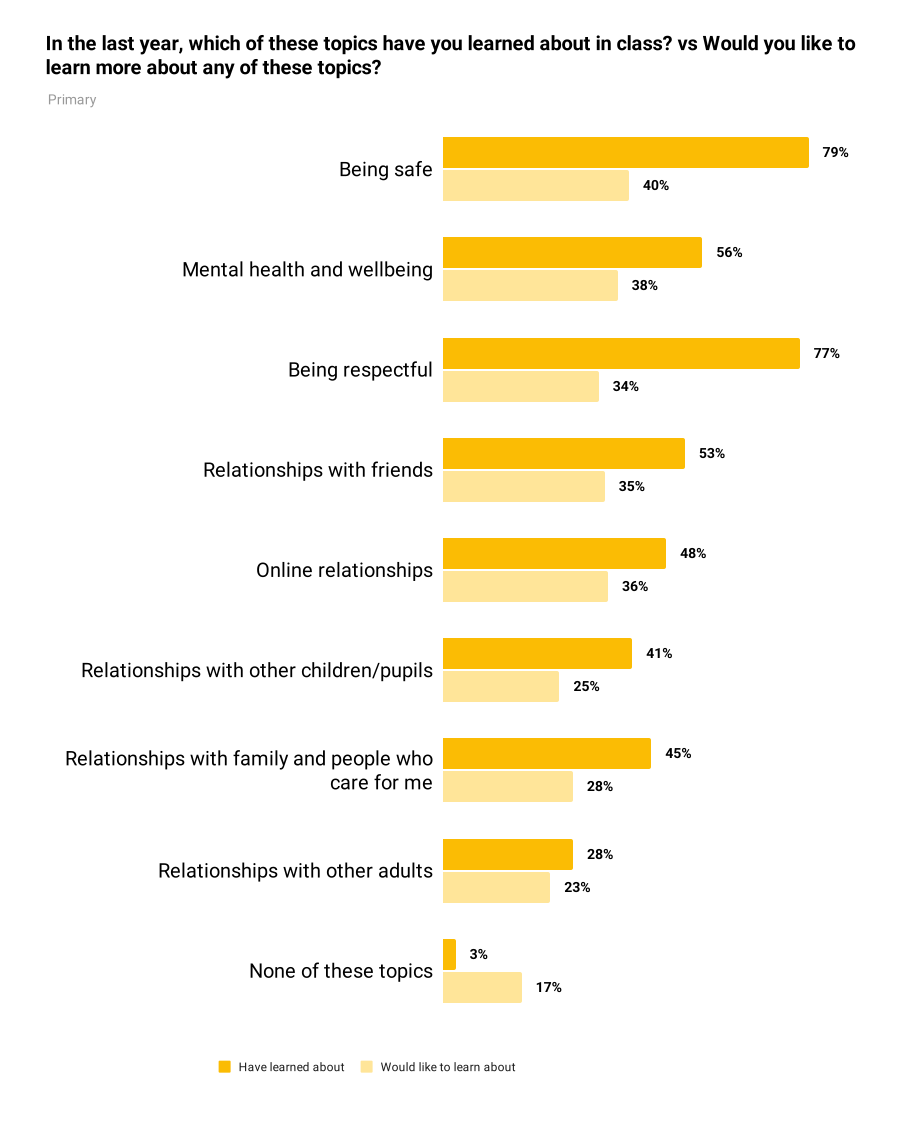
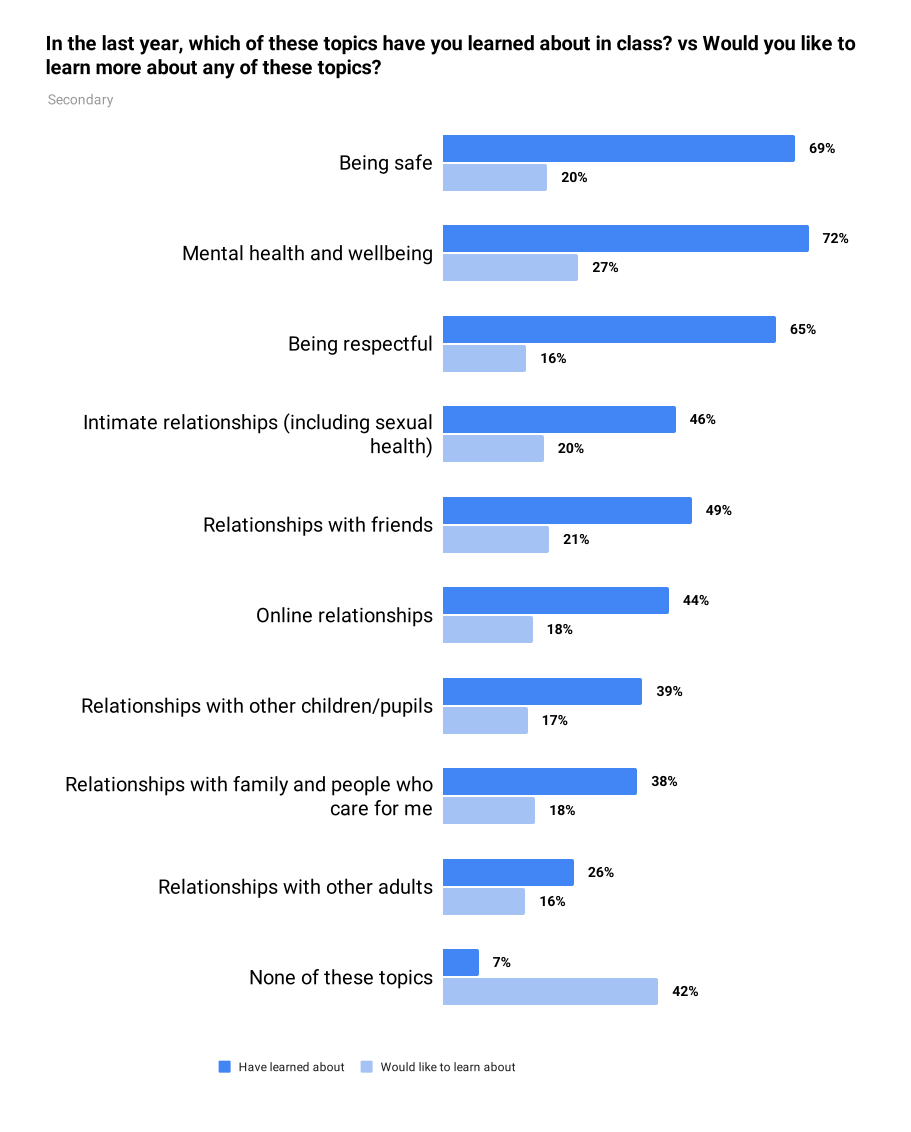
It is noteworthy that primary pupils are less likely than secondary pupils to report learning about mental health and wellbeing, but more likely to report wanting to learn more about it. It is also noteworthy that primary-aged pupils are more likely to want to learn more about online relationships. As noted earlier in this blog, primary-aged pupils were less likely to report feeling safe online than secondary-aged pupils. A large proportion of secondary-aged pupils also reported that they would not like to learn more about any of the topics – it is important to consider why this may be.
These responses underline why listening matters. Pupil feedback reveals gaps, disengagement, or changing needs. Listening allows schools to adapt safeguarding education so it remains relevant across age groups, rather than assuming a one-size-fits-all approach.
Knowing who to turn to: the role of trusted adults
Safeguarding systems only work if pupils actually use them.
Schools may have trained safeguarding leads and clear reporting routes, but listening reveals a more complex reality. When asked, “If something worries you, how often do you have an adult at school whom you trust and could talk to?”, only around a third of pupils consistently say “always/very often” or “quite often”. This pattern has remained stable over three years.
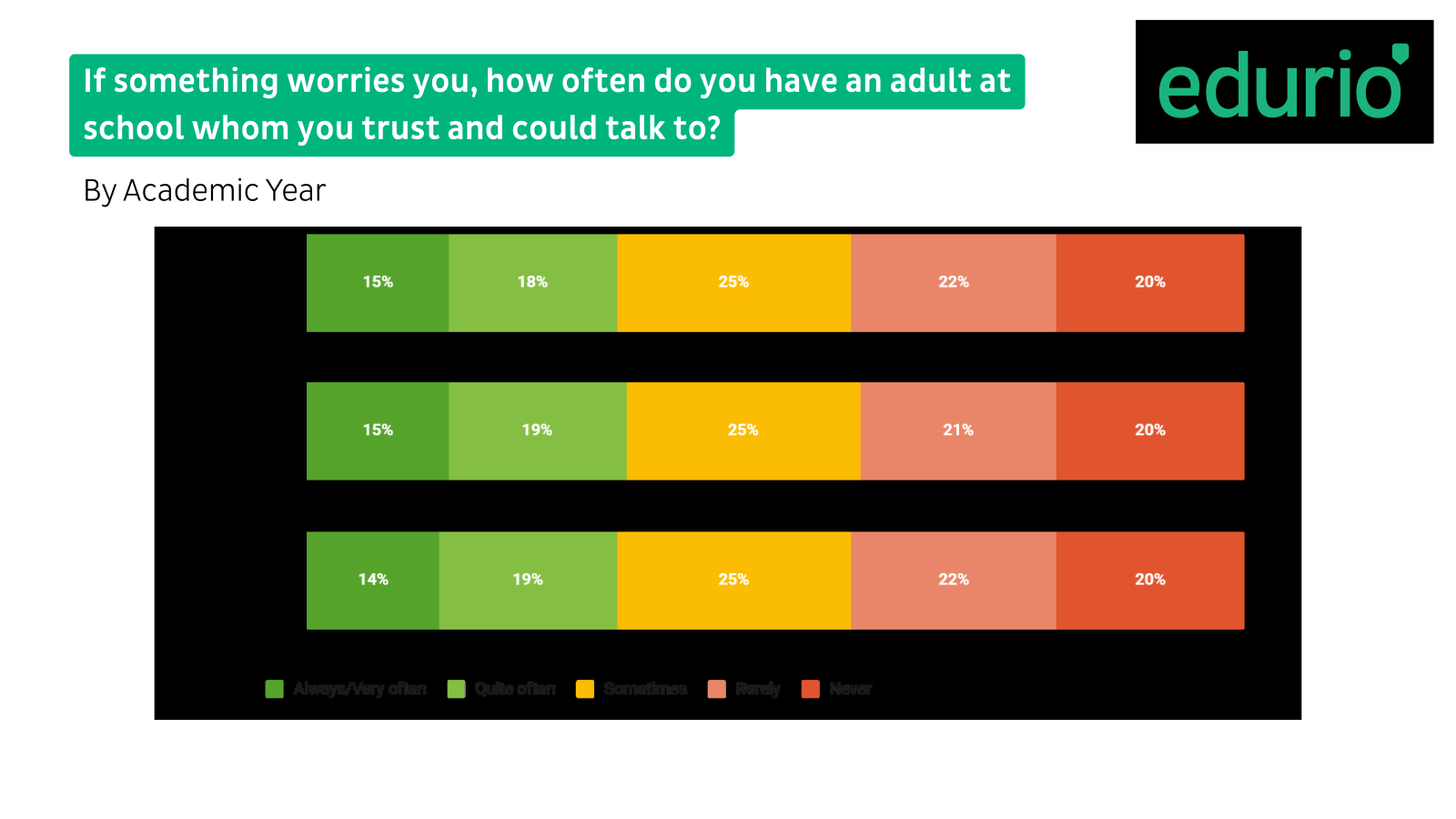
That means many pupils do not feel they have reliable access to a trusted adult. The data also shows important differences: male pupils are more likely to report having a trusted adult than female pupils or pupils with another gender identity.
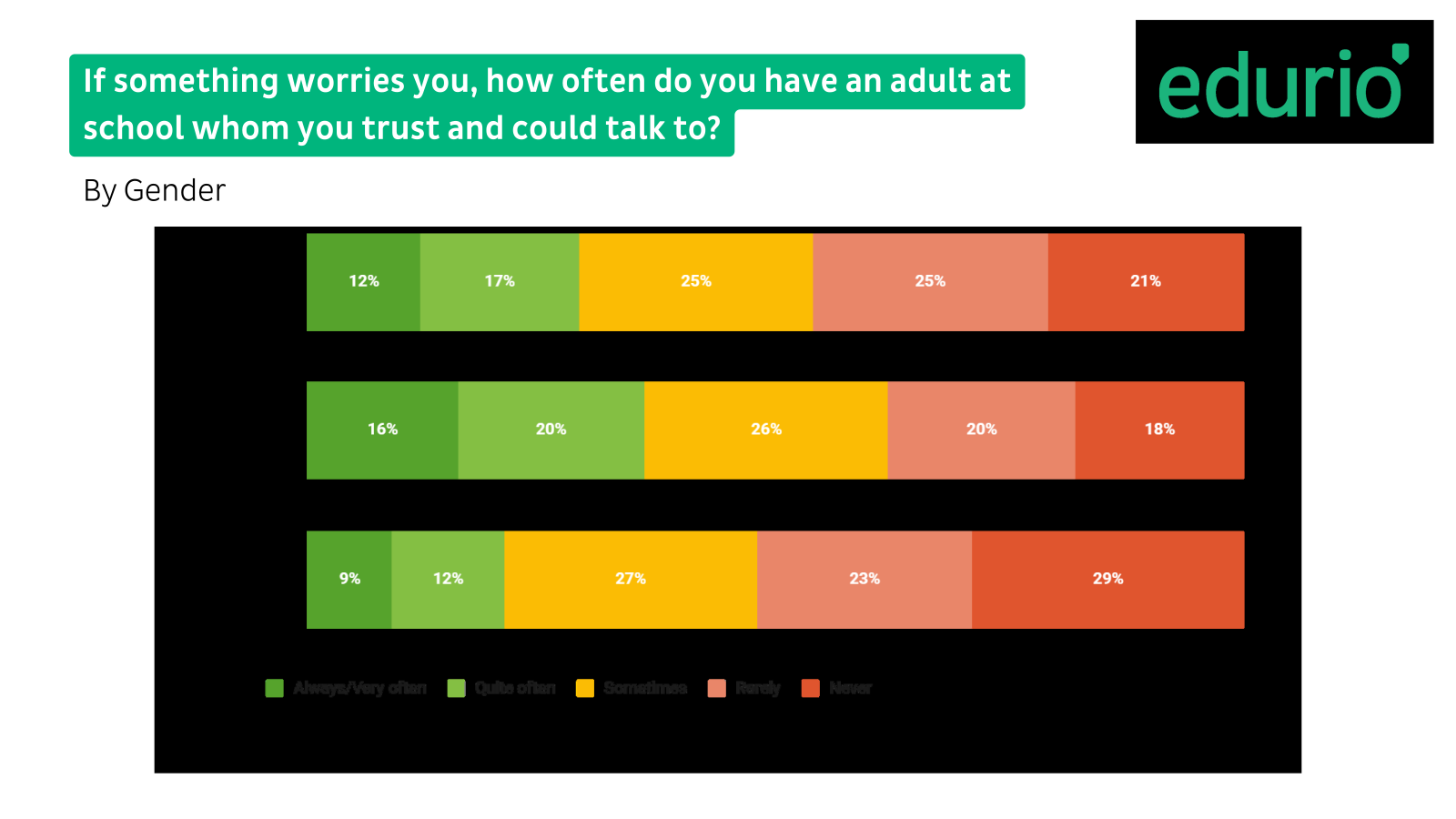
This finding is also replicated in research conducted by Football Beyond Borders and The Lost Boys Taskforce, which surveyed pupils on their courses using the same question.
This raises essential questions about inclusion, confidence, and access. Safeguarding isn’t just about whether support exists; it’s about whether it feels available to every pupil. Listening helps schools identify who is being reached and who may be missing out.
Trusted relationships beyond school
The Pupil Experience survey also shows where pupils turn when they are worried:
- 46% talk to friends at school
- 39% talk to parents or carers
- 22% talk to a teacher
- 14% talk to another adult at school
- 18% say they “do nothing”
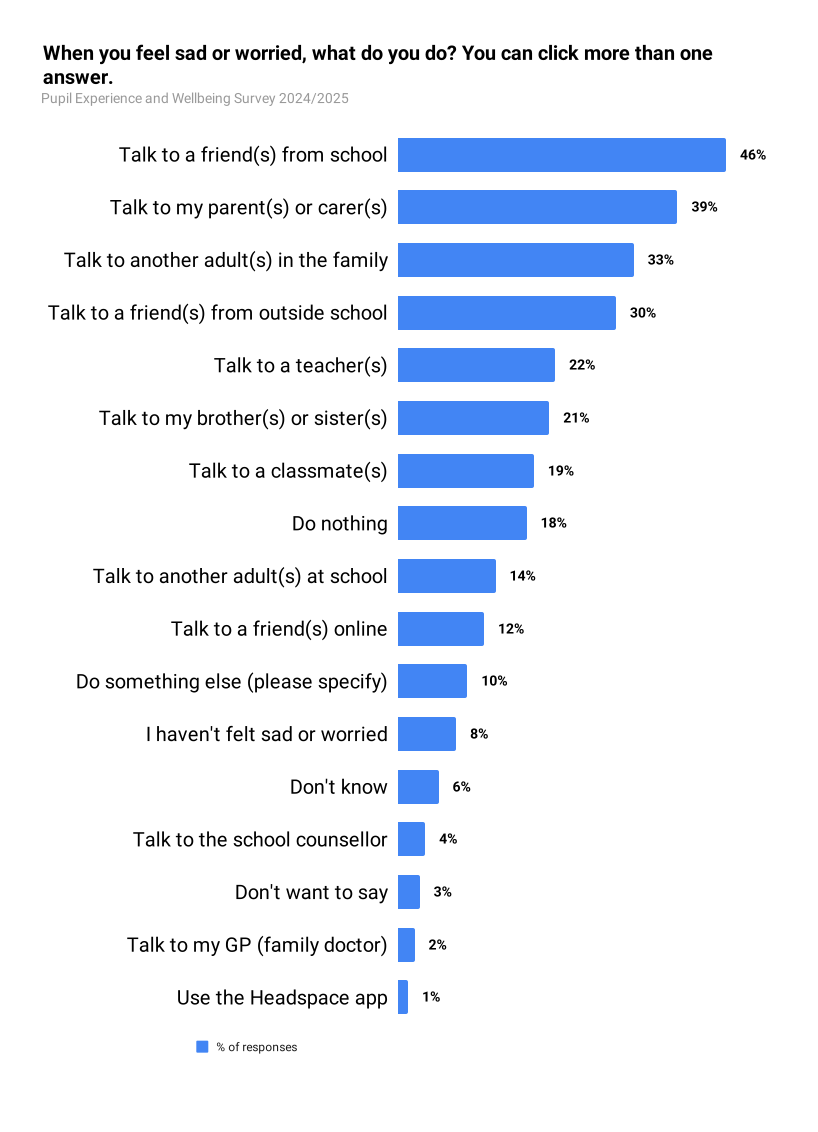
These findings highlight the shared role of schools and families in safeguarding. Parents remain a crucial source of support, but schools cannot assume concerns will be raised elsewhere. When pupils choose to “do nothing”, safeguarding risks escalate silently.
Learning from the Lost Boys Taskforce and Football Beyond Borders
The work of the Lost Boys Taskforce and Football Beyond Borders brings this into sharp focus. The research of the Youth Endowment Fund estimates that over 630,000 young people aged 12–16 in England start secondary school without feeling they have an adult they can turn to. Without trust, concerns remain hidden. This affects wellbeing, attendance, behaviour, and the ability to act early when something goes wrong.
FBB’s research and the Lost Boys Taskforce plan show that trust is built through consistency and careful listening, alongside transparency about what happens when a young person speaks up. The Taskforce argues the Trusted Adult Guarantee is “about more than policy”, it’s a commitment, and proposes tracking whether pupils have a trusted adult through annual school surveys. By training the existing schools and sports workforce, and making support easier to access, schools can take direct action to ensure fewer young people are left out.
This research, and Edurio’s data, consistently show that trust is built through careful listening, consistency, and clarity about what happens when someone speaks up. Policies alone can’t achieve this. Listening makes safeguarding visible, lived, and actionable.
Want to understand how your school or trust compares?
Running the Edurio Pupil Experience and Wellbeing Survey allows schools and trusts to benchmark safeguarding and belonging culture against national data and gain deeper insight into pupils’ lived experiences. By listening well, schools can move beyond assumptions and create safer, more supportive environments for every pupil.
See it in action →