 Share
Share  Share
Share  Share
Share Before pupils stop coming to school, many have already stopped feeling that school is for them. Attendance continues to be one of the biggest challenges facing schools across England, but the data leaders rely on often tells only part of the story. Registers can show who is absent and when, but they rarely explain why pupils are disengaging in the first place.
The stakes are higher than ever. The 2026 Schools White Paper sets out plans to establish clear expectations around parental engagement for the first time, and Ofsted’s inspection framework, introduced in November 2025, now combines attendance and behaviour into a single evaluation area, with inspectors looking not just at tracking data, but at whether schools foster belonging, positive relationships and inclusion to reduce absence. Attendance is no longer just an operational challenge. It is a measure of school culture.
To make meaningful progress, schools need to look beyond absence as a number and start understanding attendance as a signal of belonging.
The pressure is real, but the tools may not be enough
Leaders are under serious pressure to improve attendance and reduce persistent absence. The most common responses, targeted interventions for at-risk pupils, monitoring and tracking, and parental engagement, are all reasonable. But they are largely reactive. They identify a problem once it has already appeared in the data.
What they cannot do on their own is explain why a particular pupil, in a particular year group, is starting to disengage before absence shows up at all.
What the data reveals about belonging
Edurio’s Pupil Experience Report 2025, drawing on feedback from over 230,000 pupils across England collected in 2024/25, is clear on this point: wellbeing, belonging, safety and engagement are powerful predictors of outcomes such as attendance, motivation and attainment. They are not peripheral measures. They are early warning signals.
And the national picture of those signals is concerning.
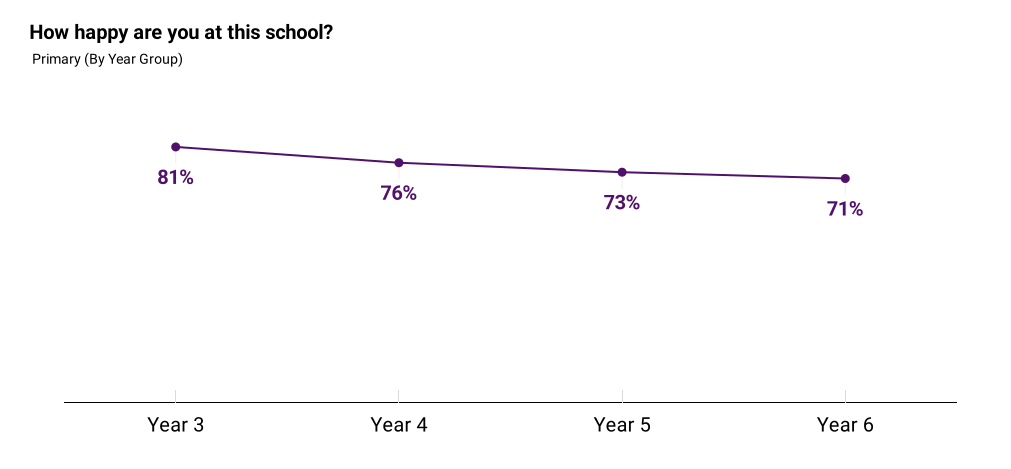
Only 44% of secondary pupils feel happy to be studying at their school. Happiness falls sharply after Year 7, where 57% of pupils report feeling happy, and reaches its lowest point in Years 8 and 9, where it drops to around 40%. That is the period when absence often starts to rise.
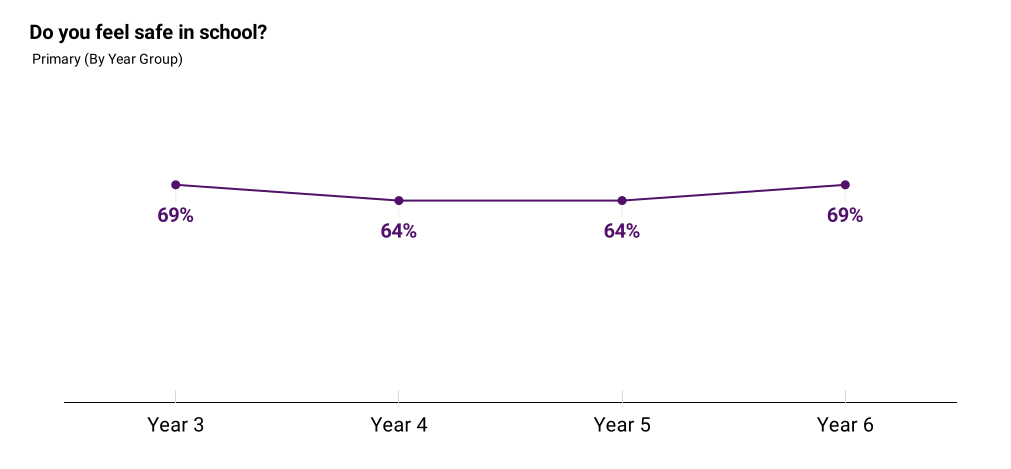
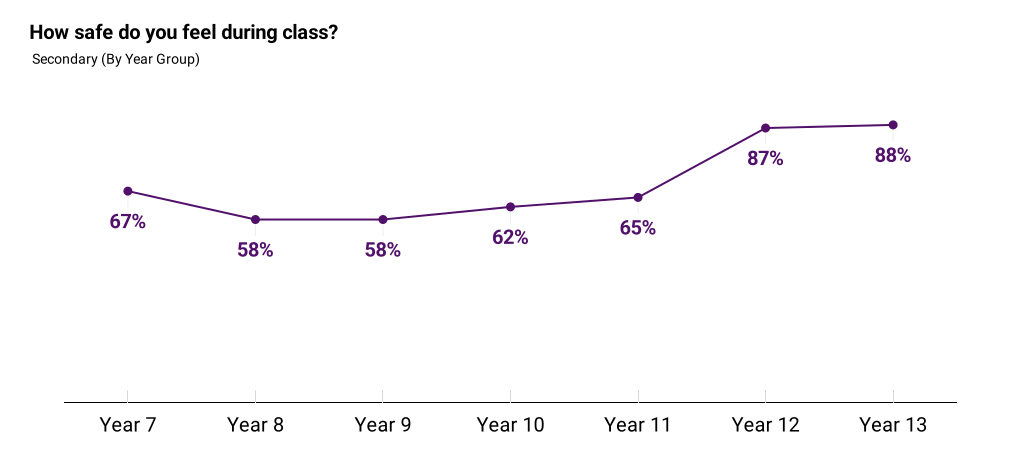
Safety follows a similar pattern. Only 63% of secondary pupils feel very or quite safe during class, with the biggest dip again between Year 7 and Years 8 and 9. In primary school, feelings of safety also decline as pupils move through the year groups, falling to 64% in Years 4 and 5.
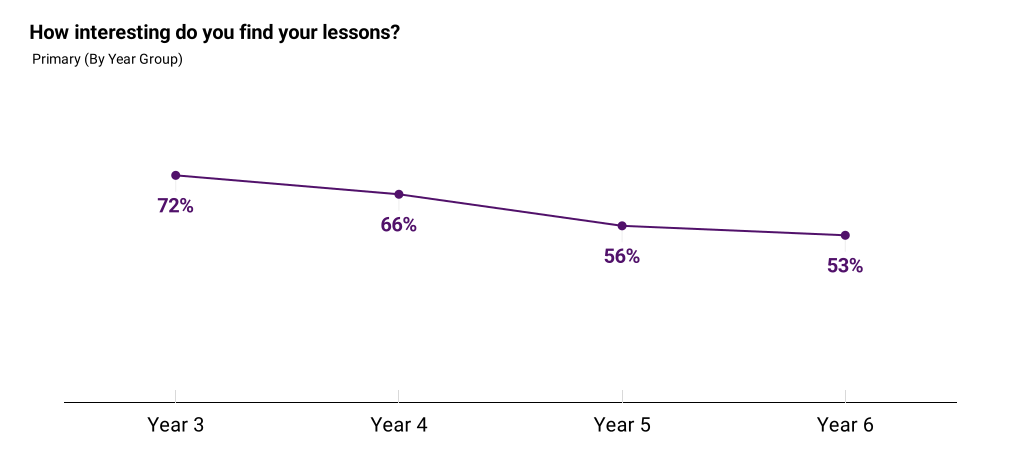
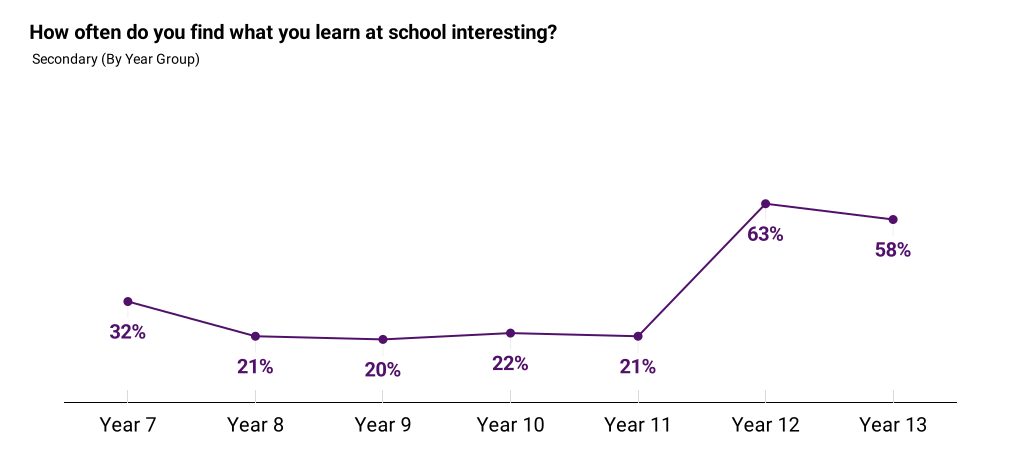
Engagement with learning is perhaps the starkest figure. Just 26% of secondary pupils say they often find what they learn at school interesting. Among primary pupils, that figure is 67% in Year 3 and falls to 53% by Year 6.
These are not niche or unusual findings. They represent the experience of hundreds of thousands of pupils. And for each one of those pupils, the question leaders cannot answer from attendance data alone is: do they feel safe, seen, supported and motivated enough to come back tomorrow?
To see how your school or trust compares to these national figures, take a look at Edurio’s Pupil Experience Survey and Pupil Belonging Survey. Both benchmark your results against our national dataset, so you can see exactly where your pupils sit relative to schools and trusts across England.
When parents are unengaged, absence rises
Disengagement rarely happens in isolation. When parents feel disconnected from the school, the risk of absence rises. Edurio’s research shows directly that lower parental engagement often correlates with higher pupil absence.
Yet in 2024/25, only 61% of parents say they are satisfied with their school’s efforts to engage them.
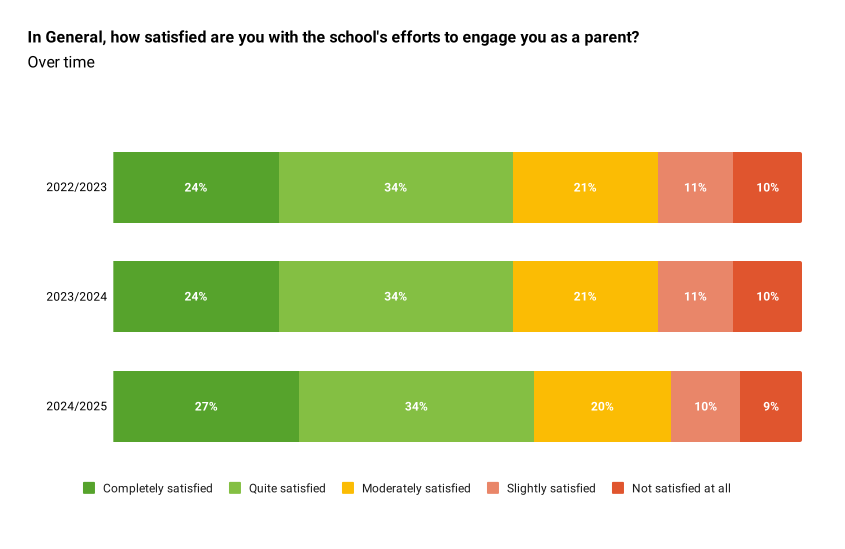
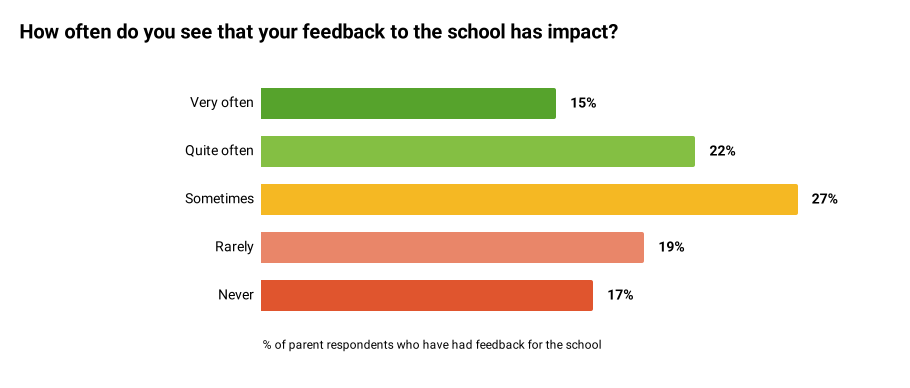
Only 27% say they often see their feedback having an impact very or quite often. When parents feel their voice does not count, they are less equipped to reinforce the importance of attendance at home, and less likely to raise concerns before absence becomes habitual.
Edurio’s Parent Experience Survey benchmarks your results against these national figures, so you can understand how your parent community’s experience compares and where the relationship may need strengthening.
Act before absence becomes a habit
Attendance data can show patterns. Pupil, parent and staff feedback can reveal the causes behind those patterns.
If a year group has rising absence, leaders need to know whether the issue is curriculum pressure, anxiety, peer relationships, behaviour climate, family confidence, or something else entirely. Those causes demand different responses. Without community insight, even well-resourced interventions may miss the mark.
The schools and trusts that make the most progress on attendance tend to be those that combine data on what is happening with feedback on why. They listen to pupils about their sense of safety and belonging. They listen to parents about their relationship with the school. They listen to staff about what they are seeing in classrooms day to day.
That combination gives leaders something attendance data alone cannot: the ability to act before absence becomes entrenched.
Find out more: belonging, attendance and pupil voice
Join our upcoming webinar series on belonging and attendance, where we explore what pupil, parent and staff feedback can tell leaders about the hidden drivers of absence, and how to act on it.