 Share
Share  Share
Share  Share
Share Human Intelligence in the age of AI
Every day, school and trust leaders make difficult decisions about staff wellbeing, pupil experience, attendance, retention and support for families. The answers rarely come from data alone.
At Edurio, we call what’s needed Human Intelligence: the judgement, experience and context that help schools ask better questions, interpret feedback clearly and turn insight into meaningful action.
AI is changing how schools access information quickly, and we use it across our platform because faster analysis and clearer patterns genuinely help. But information and intelligence are not the same thing. AI finds patterns. It synthesises. What it cannot do is pick up what has shifted in the mood of a staffroom, challenge an assumption a leadership team has been carrying unchecked, or bring the kind of sector knowledge that comes from years of working closely with schools.
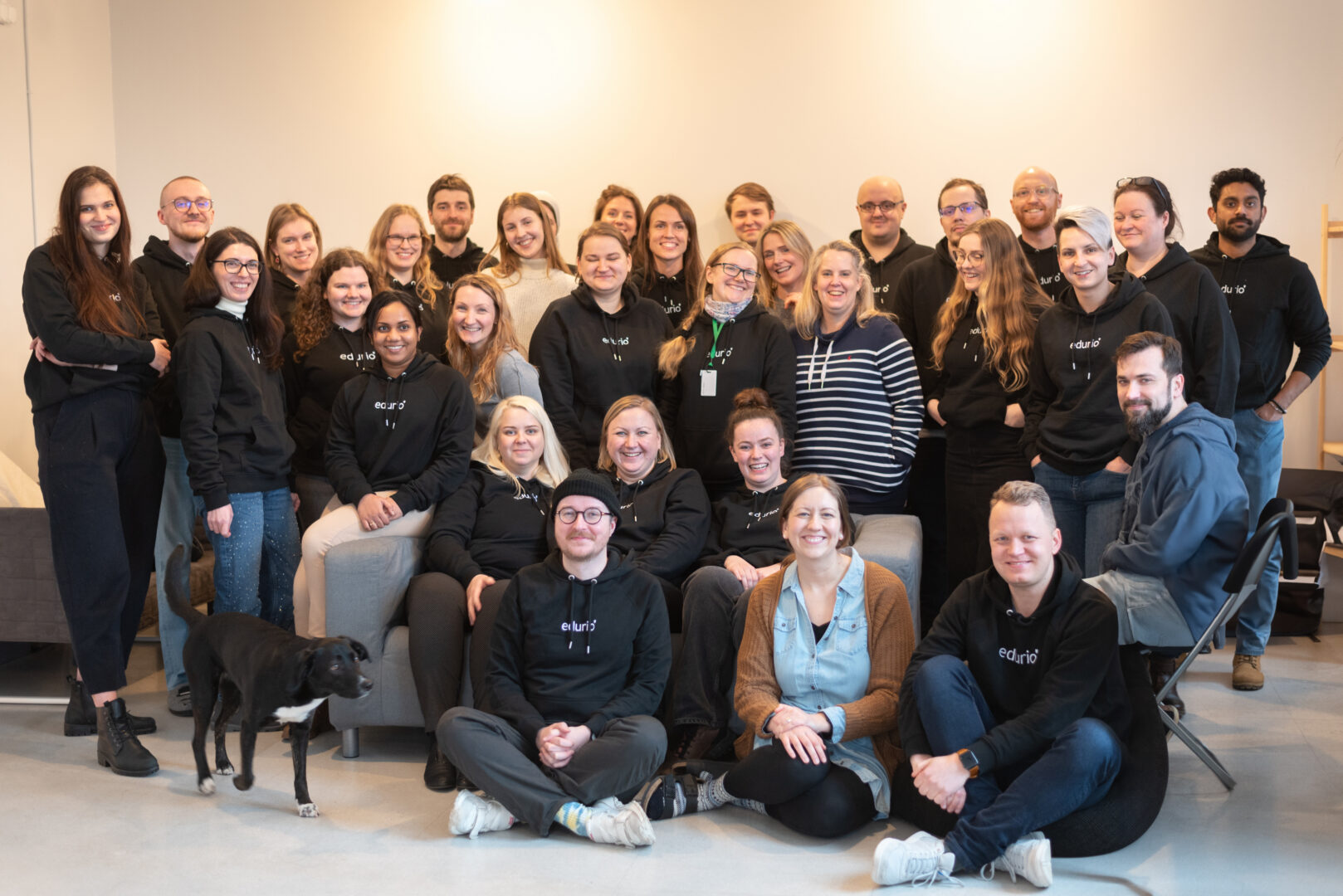
The organisations that use technology well are the ones that pair it with human judgement and experience. That is what the people below bring to the work every day.
One question for our team
We recently asked members of the Edurio team:
“What’s the smartest thing a school or trust has taught you?”
The answers below offer a glimpse into the conversations, experiences and perspectives that shape how we think and work every day.
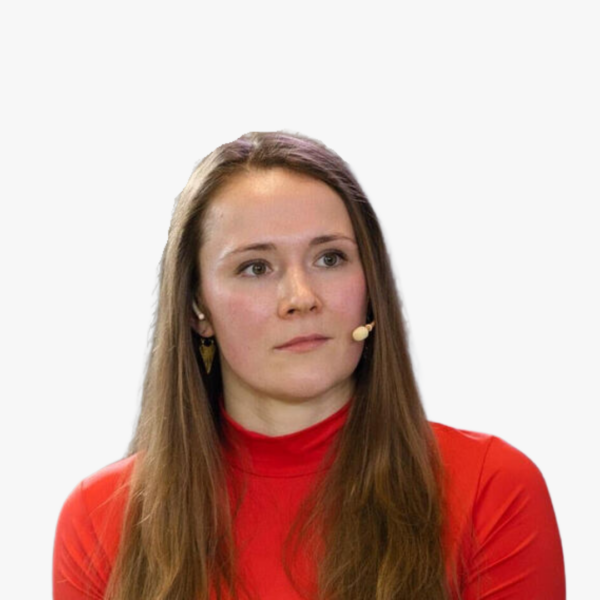
Agnese Veckalne-Lescinska, Director of Operations
“The smartest thing a school taught me is that genuine care plays such a huge role in pupil outcomes. When I was in secondary school, my math teacher volunteered her time for ‘zero-hour’ lectures at 7:15 a.m. to help a group of us who were struggling with some math topics, showing a level of commitment that went far beyond her obligations. Over time, these sessions were crucial in improving our grades and our overall discipline toward learning. This was a great example of when a teacher invests deeply in their students, the students meet them halfway with the discipline and mutual respect necessary to thrive.”

Alfebin Ubaidulla Vadayil, Marketing and Sales Data Analyst
“The thing I’ve learned from schools and trusts is that improvement doesn’t really have an endpoint; it’s more of a way of thinking. I’ve always believed in stepping out of my comfort zone and continuing to grow, and seeing how schools and trusts keep evolving has only strengthened that mindset in every part of my life.”

Benjamin Haslewood, Insights Lead
“The smartest thing a school has taught me is that listening well is often more valuable than having the quickest answer. The most effective schools I’ve seen create space to really hear pupils, staff, and families before jumping to solutions. That’s shaped how I work: good decisions come from understanding people’s lived experience, not just the headline data. The best conversations have reminded me that trust is built when people feel heard, and meaningful improvement usually starts there.”

Danni Fothergill, Head of Marketing and Communications
“The smartest thing I’ve learnt from many schools and trusts is how different the experience can be across different groups of people.
For example, and this is a stat I always come back to as it genuinely blows my mind. We asked 85,000 staff how they were really doing, and loads told us middle leaders were struggling more than senior leaders (34% vs 60%). I’d never have guessed that; it only came out because people told us.”

David Phillips, Stakeholder Engagement Advisor
“The best thing a trust leader taught me is that understanding your community’s context is critical to being a successful leader. Embedding this throughout your thoughts and decisions is true leadership and is how to strengthen and grow community ties.”

Dita Bluma, Data Quality and Analytics Engineer
“Within seemingly the same environment, how different are our individual experiences. Our unique mix of identity shapes how the world meets us, how our past experiences filter what we see and how we perceive. As a result, it probably has influenced how I try to listen, separating what’s said from what I assume, tied to things like subjective perception and bias, but mostly it’s a frequent reminder that there isn’t one clean reality, but many, slightly out of sync.”

Gatis Narvaiss, Director of Product
“Before Edurio, I taught science and IT in a secondary school. What stuck with me is that learning does not only happen in lessons. Pupils are active members of the school, and given the chance, they shape it. They are creative, full of ideas, and they learn by doing, by being part of how the school runs. It’s why I care about building a platform that helps schools actually listen to their pupils and staff.”

Helena Hamina, Marketing Specialist
“Some wise words on leadership from Dan Morrow: “Listening is really important. ‘Doing’ based on listening is even more important. Telling people what you’re doing based on listening is probably the pinnacle.” This brilliant quote was said at the Trusts in Action webinar in July 2025 and has stuck with me since.”

Ian Rowe, Director of Growth
“I’ve learned many smart things from schools over the years as they are really smart places. The most recent example I’ve seen comes from Scott Cordon and Kings Leadership Academy in Liverpool. Budgets are tight and schools need to justify their spending and, where possible, demonstrate a return on investment. By using Edurio and listening effectively to their staff’s views and acting on areas of dissatisfaction, they were able to significantly reduce staff absences and resignations. They correlated this against their supply costs and estimated savings in the region of £240k in one year – a pretty good return on investment!”

Imanta Nigals, Customer Engagement Lead
“It’s important to remember that data doesn’t drive improvement; people do. Feedback is personal and relational. I once spoke with a veteran headteacher who shared his biggest learning over his career: he wished he’d led with kindness twenty years earlier. He realised too late that kindness doesn’t just make people feel better, it’s what actually inspires them to do better. Using feedback in a kind way to co-create new possibilities – that’s what I’m after!”

Iona Kelliher, Managing Director
“During a visit to a school in a mid-sized trust, the CEO showed me pictures from every school, talking me through the local community (which varied significantly from school to school), the school leaders’ journeys and what made them so perfect for their role, and the individual factors that made all the schools such positive places of belonging. She mentioned their Ofsted rating and their outcomes, but these were secondary to the stories behind them, the reasons for maintaining her passion for teaching for all these years. It was a lovely reminder of the fact that, above all else, schools are human organisations and the more we do to ensure people are happy and healthy, the more they’ll be able to achieve.”

Lucy Wilson, Customer Success Manager
“A school leader once told me, ‘If feedback doesn’t lead to visible change, people stop giving it.’ That stuck with me. It reframed surveys from a data exercise into a trust-building tool. It is about what happens next, how we close the loop, communicate actions, and show progress. The real value isn’t in collecting voices, but in proving they’ve been heard and acted on.”

Molly Henson, Director of Customer Impact
“Visiting a primary school recently, I saw first-hand the lengths teachers go to keep children happy, safe and progressing. I watched them give everything to meet the exact needs of the child in front of them, in that moment. It reminded me of a simple but powerful idea: meet people where they are, not where you assume them to be. That’s what drives real, safe progress, and is something I try to carry with me in all walks of life!”

Valdis Aglonietis, Backend Developer
“School taught me that the work is in the preparation, not the artefact. Math was easy, but history was not, so before the history exams, I would attempt to put a whole topic on a tiny scrap of paper, trying to find any possible patterns. Usually, when I finished it, I did not need it anymore. The act of compressing had been the learning.
I have never lost the habit. Whenever I face something complicated now, my first move is to try to shrink it down until I can understand it fully.”