
Teacher retention: why teachers in England resign | Edurio and OECD Data
41% of school staff have considered resigning in the past three months. Edurio’s Staff Experience Report 2026 shows the warning signs arrive long before the resignation letter, and what school and trust leaders can do about them.
England's teachers resign more often than their peers
Teachers in England resign at well above the international rate. The OECD’s Education at a Glance 2026 report found that 7.2% of fully qualified primary and secondary teachers in England resigned in 2024/25, against an OECD average of 4.2%.
Resignations also make up most of the teachers who leave. In England, 91% of departures were resignations, compared with 55% across OECD countries. The OECD notes that England’s data stops before many teachers reach retirement age, so this share is likely to understate retirements. Even so, the resignation rate itself is well above the international average.
That raises the question every school and trust leader is asking about teacher retention: what is driving those decisions, and what can be done before they happen?”
The warning signs come first
A resignation is the end of a decision, not the start. Edurio’s Staff Experience Report 2026, drawing on 110,673 staff across 221 trusts, shows how many people are weighing up that decision at any one time.
41% of school staff have considered resigning from their post at least sometimes in the past three months. That figure has held steady for two years, having fallen from 43%. Among teachers it is higher still, at 45%, although that is down from 50% two years ago. Every role held steady or improved this year.
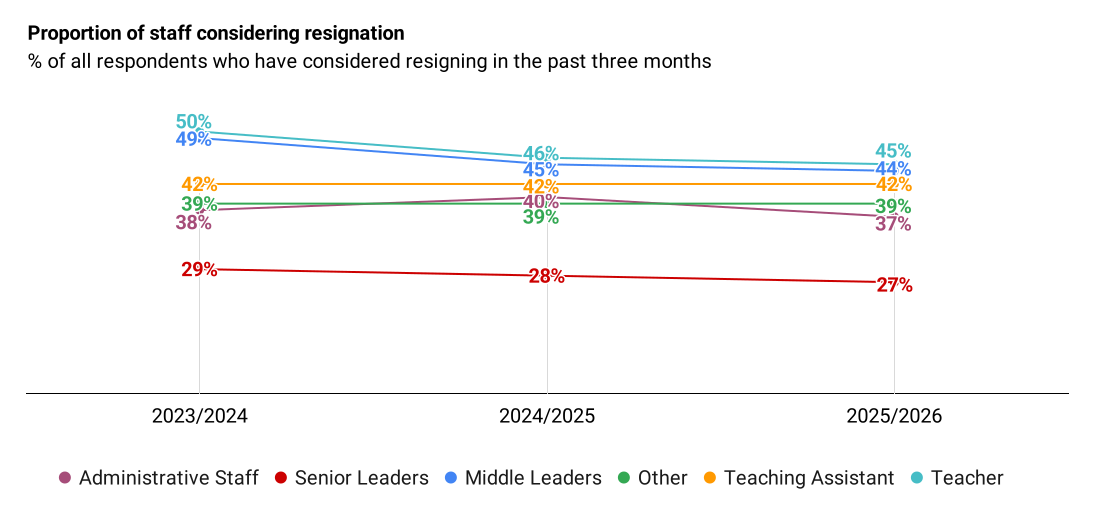
Considering resigning from a post is not the same as leaving the profession, and most staff who think about it will stay. But it is the earliest point at which leaders can see a problem coming, and the point at which they can still do something about it.
It's the day-to-day, not the job
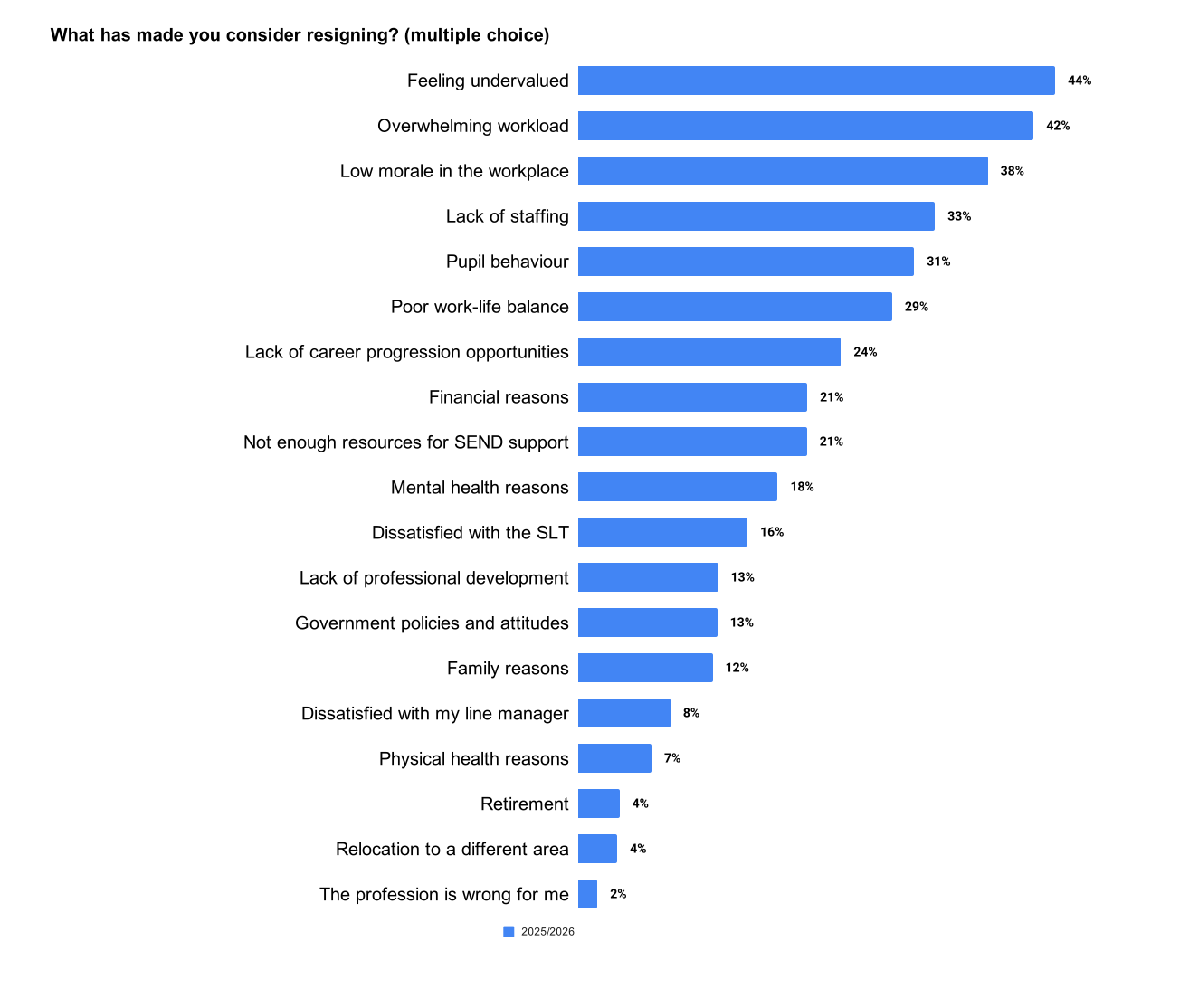
Staff are not falling out of love with teaching. Just 2% of those considering resignation say it is because the profession is wrong for them. As educator Baasit Siddiqui puts it in his reflections on the report: “Most staff haven’t fallen out of love with the job; it is the enormity of the day-to-day that pushes them away.”
What pushes them is the daily experience of the work. Feeling undervalued is the most common reason staff give for considering resignation (44%), followed by overwhelming workload (42%) and low morale (38%). For teachers, the top three are overwhelming workload, poor work-life balance and feeling undervalued.
The OECD data points the same way. Teachers in England report working just under 44 hours a week, against 40 hours for other graduate-level workers. Edurio’s data shows that pressure is growing: 47% of staff now feel overworked very or quite often, up two percentage points on last year, and 46% feel stressed very or quite often, up one percentage point.
What keeps people in post
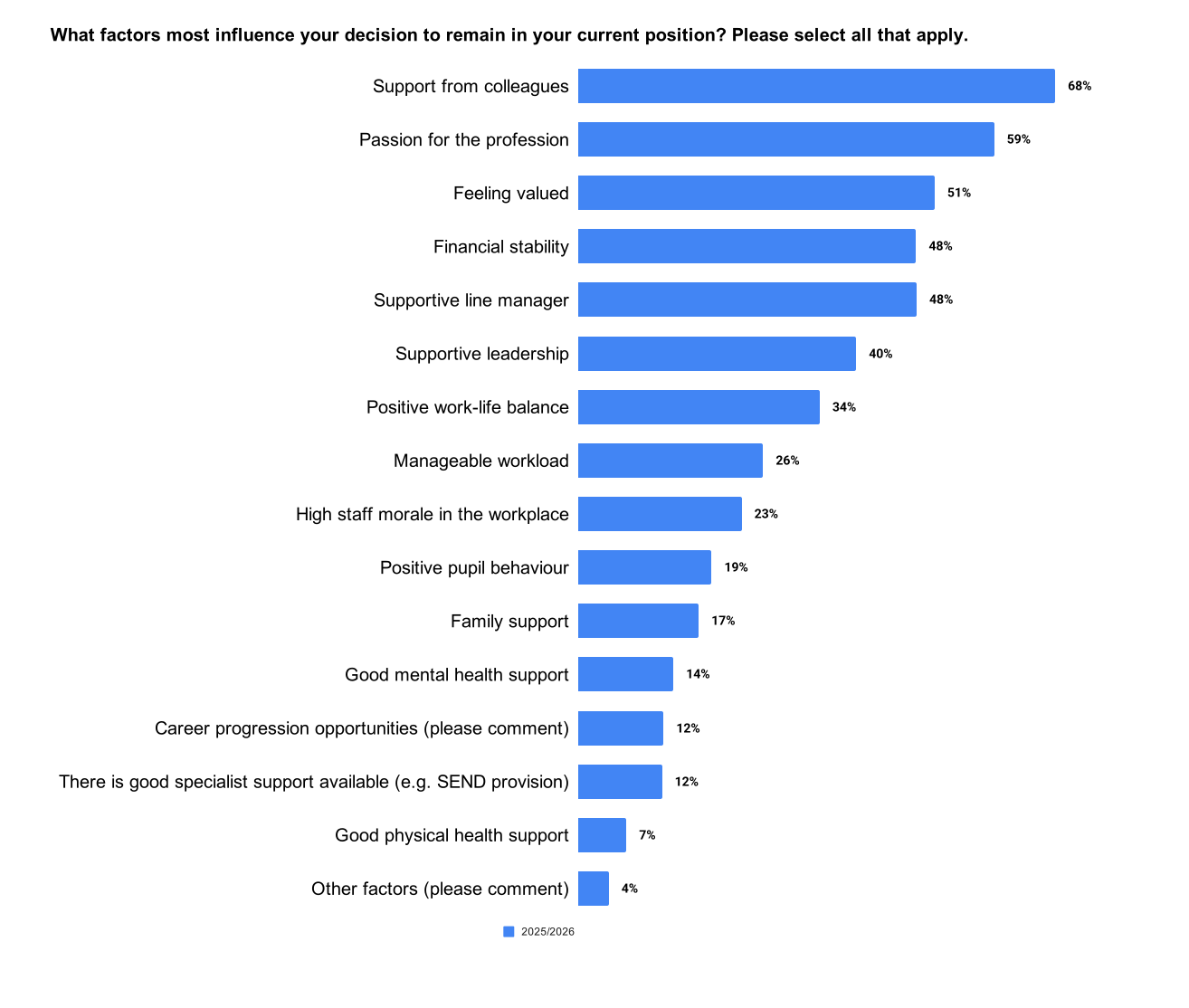
For the first time this year, Edurio asked staff what makes them stay, not just what might make them leave. The answer is people. Support from colleagues is the most common reason to stay, cited by 68%, ahead of passion for the profession (59%), feeling valued (51%) and financial stability (48%).
Baasit, who spent ten years teaching and leading departments, sees the same pattern: “Teaching can never be a solo performance; it is a community profession.”
The answers reveal an imbalance that matters for retention strategy. A supportive line manager is a reason to stay for 48% of staff, yet only 8% of those considering resignation blame a poor line manager. Good line management keeps people, even though its absence is rarely the reason they give for going.
Feeling valued is the one factor near the top of both lists. Feeling undervalued is the most common reason to consider leaving, and feeling valued is the third most common reason to stay. It is the lever that works in both directions.
How to improve teacher retention
Nationally, 41% of staff have considered resigning. But that average will not tell you where your own trust sits, which schools are under most pressure, or which roles are most at risk.
Three steps will make the biggest difference:
- Know your own numbers. Ask staff regularly how often they have considered resigning, and look at the answer by school and by role. The earlier you see a rise, the more time you have to act.
- Make recognition systematic. Feeling valued cuts both ways, so build recognition into how the trust works for every role, not just when someone raises it. As Baasit says, “staff want to know their effort and creativity are genuinely seen.”
- Invest in line management. Give managers in every school the time and training to support their teams. It is one of the strongest reasons staff give for staying.
Download the Staff Experience Report 2026 to see how your staff compare with 110,673 colleagues nationally.
 Share
Share  Share
Share  Share
Share